

The planet just got incredibly close to breaching landmark global warming target
Earth experienced its fifth-warmest February on record last month - with temperatures at 1.49C above pre-industrial levels, scientists have said.
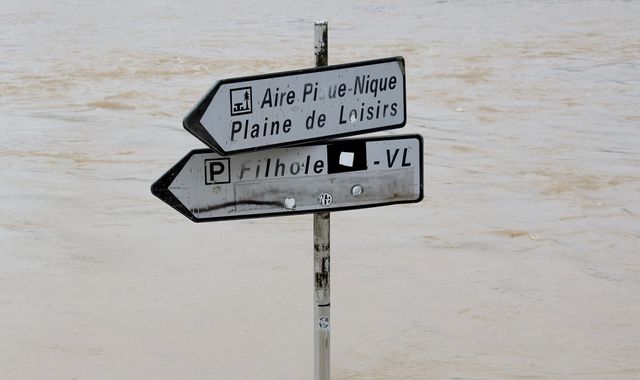
The month was marked by "extreme rainfall and widespread flooding in Western Europe and the third-lowest sea ice extent in the Arctic", the Copernicus Climate Change Service said on Tuesday.
Experts say climate change was at least partly to blame for the exceptionally wet season across Western Europe.
It saw a run of intense storms including Leonardo, Pedro, and Nils, which was described as having "uncommon strength" by French weather service Meteo-France.
France, Spain, and Portugal in Europe, and Morocco, Mozambique and Botswana elsewhere in the world saw remarkably wet conditions, leading to severe flooding that caused widespread damage and loss of life and livelihoods.
Europe's wet and warm conditions mirrored those in the UK, which saw one of its five wettest Januarys since 1890 in the southern counties of England, and the warmest February day since 2019.
Just 0.01C below landmark target
The globe's 1.49C above the estimated 1850-1900 average used to define the pre-industrial level made it the fifth-warmest February across the planet, the study said.
The target of the 2015 Paris Agreement was to keep global temperatures to less than 1.5C above pre-industrial levels. The UN has warned the chance of keeping to that goal is "virtually zero", with the UK braced for a rise of at least 2C within the next 25 years.
Researchers based their latest assessment on Copernicus' own ERA5 dataset, compiled from hourly readings of climate data, which it describes as a climate research standard.
The warmest February on record was in 2024, it said.
In the Arctic, the average sea ice extent in February was 5% below, meaning it was the third-lowest on record for the month. In the Antarctic, the monthly sea ice extent was close to the monthly average.
Read more: Wettest winter on record for parts of the UK
Sharp divide in Europe's weather
Study author Samantha Burgess, the strategic lead for climate at the European Centre for Medium-Range Weather Forecasts (ECMRW), said there was "a really strong divide across Europe", as Scandinavia and Eastern Europe were "much colder than average", whereas the opposite conditions prevailed in most of western and Southern Europe.
Ms Burgess told Sky News the position of the polar jet stream was one of the causes, noting it "has gone further south over the winter, which is why we've had a very dim, very wet winter".
Its unusual position, combined with a series of narrow bands of very moist air, named atmospheric rivers, "led to heavy-to-extreme precipitation over western and Southern Europe. This triggered widespread flooding and landslides, particularly across Iberia and western France," the study said.
Climate change's impact
Ms Burgess said February's extreme events "highlight the growing impacts of climate change and the pressing need for global action".
It's part of our changing winter and changing seasonality, she said, with summers "getting longer, starting earlier and ending later. They're also getting more intense".
Winters, by contrast, are "getting less cold, and sometimes they're also getting shorter".
'Blocked weather pattern'
Met Office climate spokesperson Grahame Madge was less sure, saying the recent wet weather in the UK, particularly in Cornwall, which experienced the wettest winter on record, was a "blocked weather pattern over Scandinavia and an active jet stream driven by cold conditions in North America".
Mr Madge said there is "no strong evidence linking this specific weather pattern to climate change, [but] climate change is expected to lead to warmer, wetter winters and hotter, drier summers in the UK".
'Human-caused' emissions
It's a trend that is "already being observed in rainfall records, with an increased winter rainfall", he said.
Reading University climate science professor Richard Allan said the "serious weather extremes" seen during the month were "a classic winter battleground between warm and wet versus cold and dry conditions over Europe".
"Heavy and persistent rainfall in Western Europe was further intensified by the additional moisture carried by winds from the oceans that are warmer than they would otherwise have been due to the progressive heating from human-caused emissions of greenhouse gases," he added.
Dr Michael Byrne, reader in climate science at the University of St Andrews, said the UK "is in a pretty wet part of the world and very much influenced by this warmer air, [creating] more moisture when it rains".
He warned "it's very likely we should expect more flooding events, more rainstorms, both in the winter but also in the summertime, delivering large volumes of rain in a short period of time".
It is, he said, "very much what we expect the UK to be seeing more of in the future".
Ms Burgess agreed, saying "we've got to adapt" by recognising that climate change is "here to stay", and said she remains "optimistically hopeful", pointing to a doubling in the number of cities that have adaptation measures since 2018.