

Energy price cap facing upwards pressure from US storm
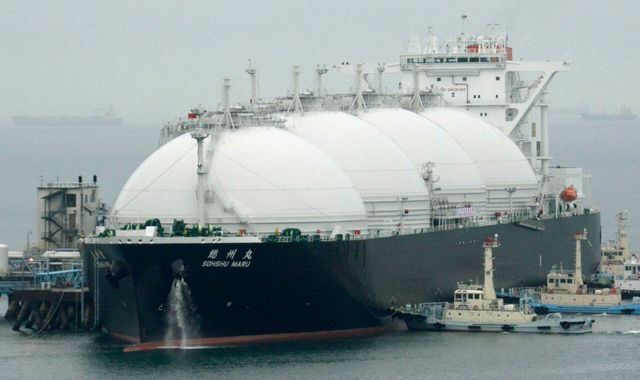
Energy bills for households and businesses are facing upwards pressure from a surge in wholesale natural gas costs, according to market experts.
Both day-ahead and month-ahead contracts rose further on Monday as high demand and supply disruption in the storm-hit United States take their toll on prices across Europe, crucial not just for gas supply but electricity generation.
In the UK, the February delivery figure was up more than 45% over the month to date at one stage on Monday.
Some of the price pressures are weather related, while others are structural.
Money latest: Criminal barrister talks about 'painfully low' salaries
The big freeze in the US has complicated the market as supplies of liquified natural gas (LNG) are delayed and some diverted as 37 states - covering half the country's population - shiver under temperatures below -20C and a deep blanket of snow.
The weather-related disruption is predicted to last well into next week.
Europe has seen a drop in deliveries in recent weeks, the peak winter, which has exacerbated pressure on weak stocks.
Gas Infrastructure Europe data showed that EU gas storage sites were last at 45.6% of capacity, 15 percentage points below the five-year average.
It has forced up pipeline costs in the process, with UK day-ahead wholesale costs at an 11-month high.
LNG prices had been low and supplies plentiful for much of last year, thanks to weak demand in Asia and a glut of gas despite steep curbs on Russian flows because of its war in Ukraine.
Director of Europe Gas & LNG at the industry data specialists Wood Mackenzie, Tom Marsec-Manser, told Sky News: "Concerns have been rising that by the end of March aggregate storage fullness in Europe will be particularly low.
"To be clear, though, there is no risk of a gas shortage. But higher prices are needed to attract LNG tankers that could otherwise sail to Asian markets."
He pointed to the bad weather in the US complicating Europe's price pressures, but only in the short term, as extraction was delayed by frozen equipment and supplies diverted to the domestic market for heating and power generation.
He said of the outlook: "In fact, the US will produce more LNG this year than ever before. And we at Wood Mackenzie also forecast that the UK and Europe will in 2026 collectively import more LNG than ever before too.
"Globally, LNG supply is only growing, which is aiding Europe's move away from Russian gas and fuelling the transition in Asia. It will also mean wholesale prices in the UK and Europe will on average be noticeably lower by the end of the decade."
The prospect of a period of disruption to LNG shipments risks exacerbating the upwards price pressure on pipeline supplies too, particularly as demand across much of northern Europe is predicted to rise due to forecasts of colder temperatures to come.
Ofgem, the UK's energy watchdog, will set the next three-month price cap for the start of April in four weeks' time.
Any upwards contribution from a raw energy spike should be partly offset by the government's decision to remove £150 of policy costs from bills, though costs associated with improved energy infrastructure have recently been the biggest driver of cap increases.
Matt Turner-Tait, senior manager at the consultancy BFY Group, which specialises in energy, said of the gas market pricing: "The impact further out the curve is much more muted, with Q2 and Q3 prices up closer to 15%, which tells us this is a short-term squeeze rather than a shift in longer-term fundamentals.
"For consumers, the effect on the April 2026 price cap is thankfully limited, as most of the observation window has already passed, adding only around £20 to our forecast so far.
"If prices stay elevated, there is greater risk to later cap periods, but that remains highly uncertain at this stage."