
Postponed local elections - what is happening?
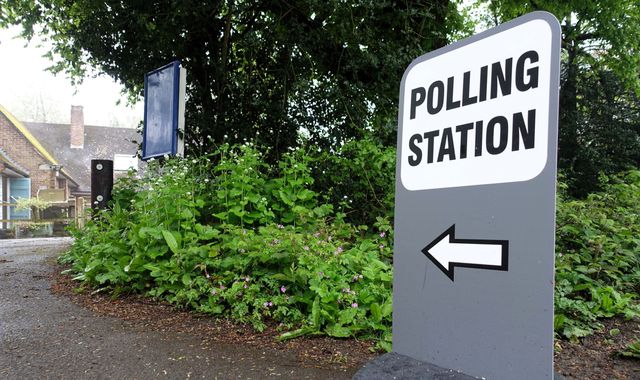
The government is to postpone a fifth of English council elections that were supposed to take place this May.
Local Government Secretary Steve Reed announced that of the 136 councils across England due for elections on 7 May, 29 will have theirs postponed.
He says this is to allow more time to focus on a massive programme of council mergers across England.
Politics latest: Follow the latest updates
Of those 29 postponements, five - East Sussex, West Sussex, Norfolk, Suffolk, and Thurrock - were originally meant to have elections last year, which were postponed to this year.
That means they will have elections postponed two years in a row - and councillors there will now serve terms of almost seven years, significantly higher than the usual four-year terms.
These councils cover areas of more than three million people.
Mr Reed said he was still considering one further case - meaning the number of postponements could potentially rise to 30.
What's the latest?
Reform UK has mounted a legal challenge to try and prevent the elections being postponed. Reform claims the party would have won many of the elections that are now not going ahead.
The High Court is to hear the case on 19 and 20 February.
The government was given a deadline of 4pm on 29 January to inform Reform of its reasons for postponing the elections, following a court order.
Reform has said the party is "determined to win this case".
"We said we would fight Labour every step of the way on this and we are doing so. Labour are disgracefully trying to deny democracy," a spokesperson said.
A government spokesperson said: "These are exceptional circumstances where councils have told us they're struggling to prepare for resource-intensive elections to councils that will shortly be abolished, while also reorganising into more efficient authorities that can better serve local residents."
Has your council requested a delay? Use our search tool below:
Mr Reed still needs to lay an order in parliament for the elections to be officially postponed, which the government says it will bring forward as soon as possible.
Why are the elections being postponed?
The elections are being postponed to allow councils to focus on local government reorganisation.
Ministers have also delayed elections for four new mayors in Norfolk and Suffolk, Hampshire and the Solent, Sussex and Brighton, and Essex.
Holding elections for councils that will soon be abolished is a waste of time and money, the government argues.
In December, Mr Reed's team wrote to the 63 councils affected by the reorganisation who were due to have elections this May, offering to postpone them if they could provide evidence it would help with reorganisation.
Not all of those 63 requested a postponement.
The government says it will hold elections for new authorities in 2027. But those councils won't be fully up and running until April 2028, meaning councillors will also end up serving a further eleven months during the transition period.
Elections have been delayed in the past to allow time for mergers of councils, such as in North Yorkshire and Somerset in 2021.
What is local government reorganisation?
In December 2024, then local government secretary Angela Rayner announced the biggest shake up of councils in England since the 1960s.
Local government is a patchwork across England, with some areas having all services run by one unitary authority, and others having services split by two tiers of councils, such as a county or city council, and a district council.
The government says this causes confusion and is wasteful.
"Local residents do not know which of their two councils is responsible for which services. No one would ever design a system in which one council collects rubbish and another gets rid of it," Mr Reed told MPs.
He added: "In many parts of the country, residents' hard-earned council tax pays for two sets of councillors, two sets of chief executives, and two sets of financial directors. That is wasting tens of millions of pounds of taxpayers' money."
The government is reorganising local councils so that all areas have one over-arching council. In practice, this will often mean the merging of several neighbouring councils.
For example, 12 existing councils in Surrey are being merged into two new councils - West Surrey and East Surrey.
They will be the first of the new councils to be elected this May, ahead of being officially set up in April 2027.